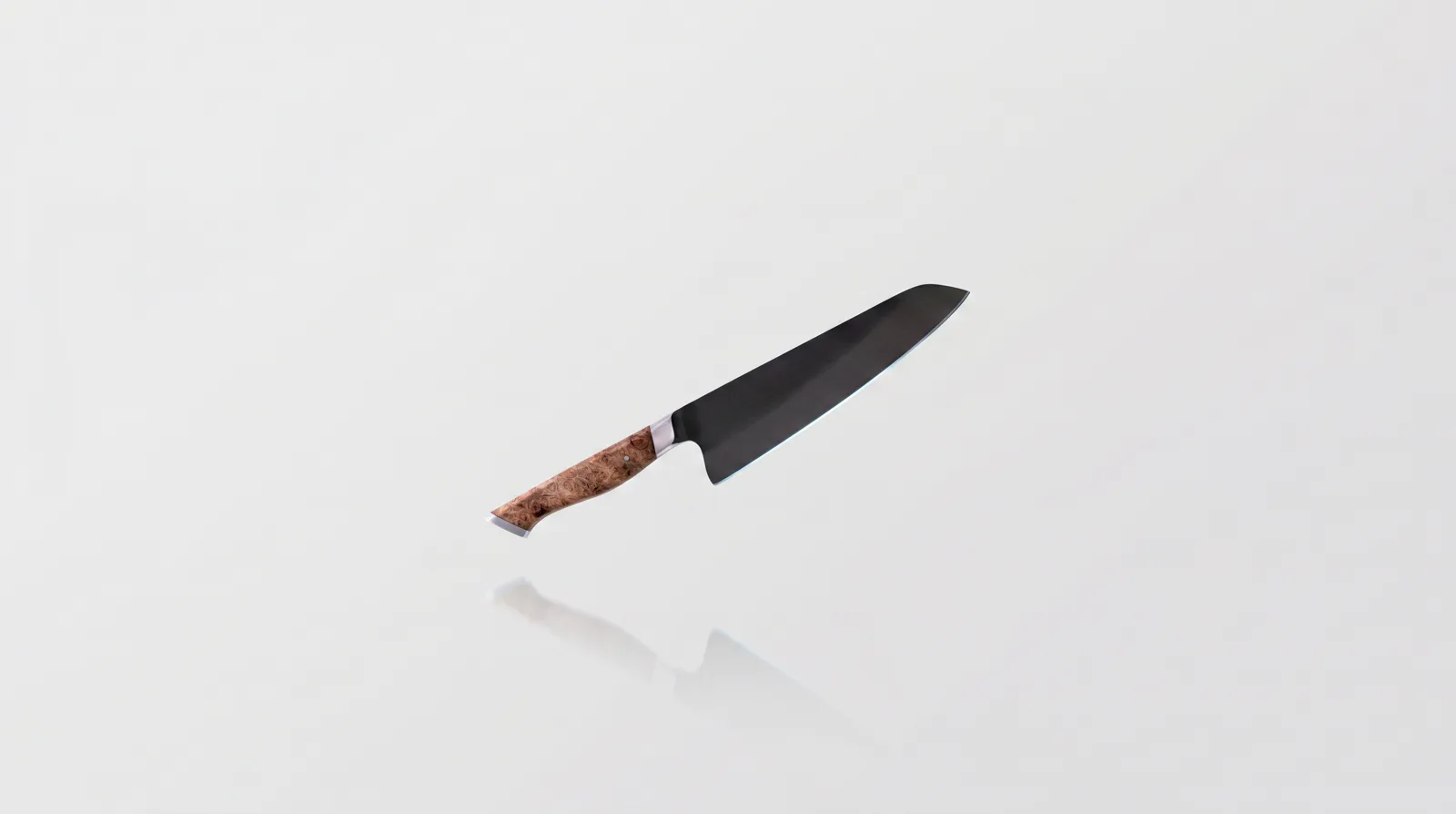
Hand Forged · carbon steel · 8-inch chef
A knife that earns its keep.
Pick it up and the work gets quieter — clean cuts, less effort, a tool that answers to your hand instead of fighting it.
High-carbon steel takes a thinner, more acute edge than stainless can — it slices where softer knives crush. Hand-finished, one at a time.
Secure checkout, powered by Stripe.
The everyday blade
Most kitchen knives ask you to push.
A dull or soft blade crushes more than it slices — herbs bruise, tomatoes tear, and you bear down harder than the food deserves. The problem usually isn't your hands. It's a thick, soft edge that was never built to take a fine one.
You feel it as effort: bearing down, sawing back and forth, a tomato that tears instead of parts. The fix isn’t a bigger arm. It’s a harder steel ground to a finer edge.
The case for it
One good knife, kept — not a drawer of replacements.
Slices where others crush
High-carbon steel hardens further than stainless, so the blade carries a thinner, more acute edge. That edge parts food cleanly instead of pushing through it — less force from you, less bruising on the board.
Holds its edge longer
A harder blade keeps a fine edge through more work before it needs attention. You spend more time cutting and less time reaching for the steel.
Full tang to a steel bolster
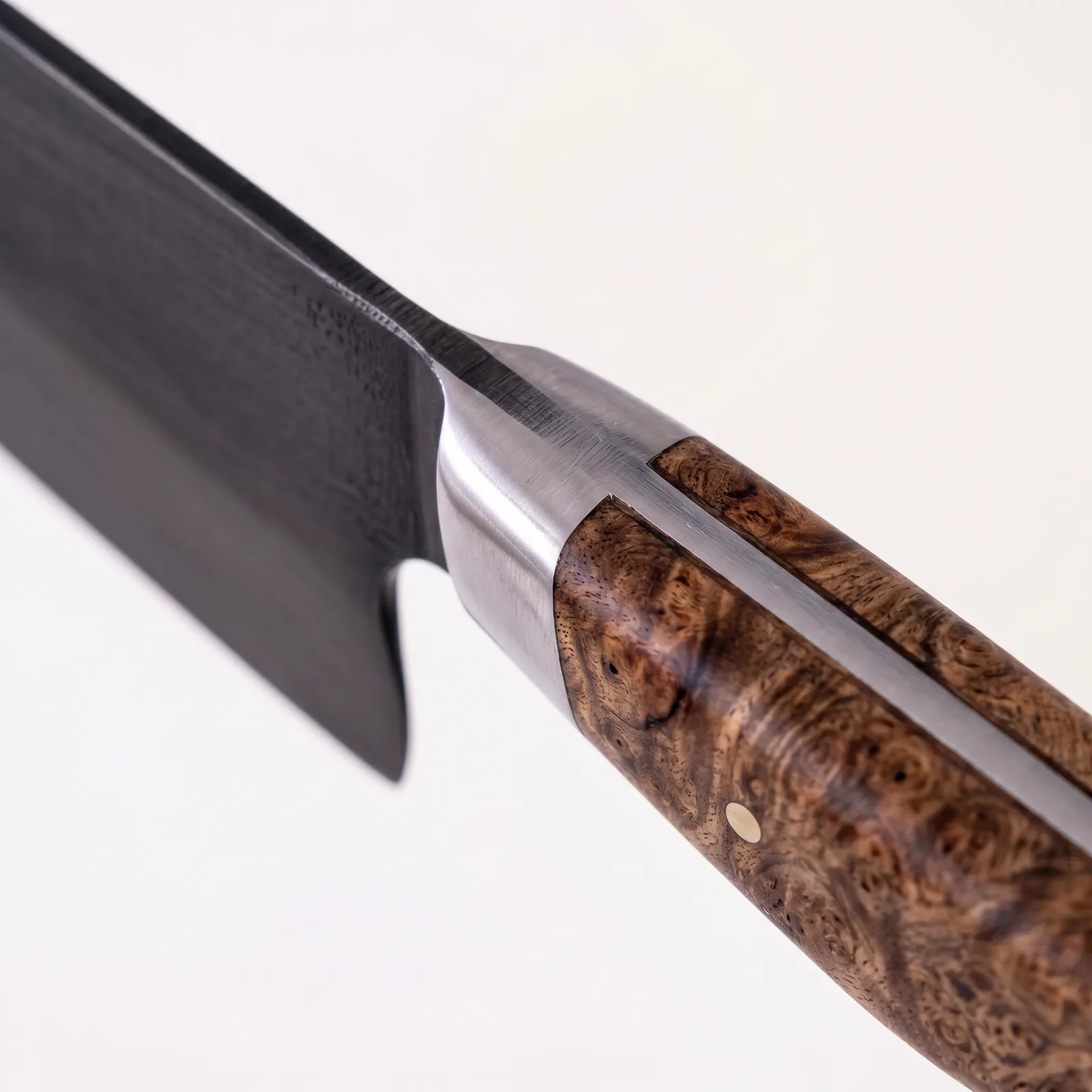
The full tang runs the length of the handle and meets a polished steel bolster at the heel.
Made to be kept
Forged steel, a full tang, and a figured-hardwood handle are built to be re-sharpened and used for years, not replaced. It's hand-finished — an object you maintain, not one you throw away.
Honest about the trade-off
With less chromium than stainless, the blade is reactive: wipe it dry after use and it develops a patina over time. That's the cost of the sharper edge, and it's the only upkeep the steel asks of you.
The steel
Why carbon steel takes a finer edge.
Less chromium, harder steel
Stainless steel relies on chromium for rust resistance, but that chromium limits how hard the blade can be made. High-carbon steel has less of it, so the steel can be hardened further.
Harder steel, thinner edge
A harder blade can be ground to a thinner, more acute cutting edge and still hold its shape under use. That geometry is what lets it slice cleanly rather than wedge through food.
The reactivity trade-off
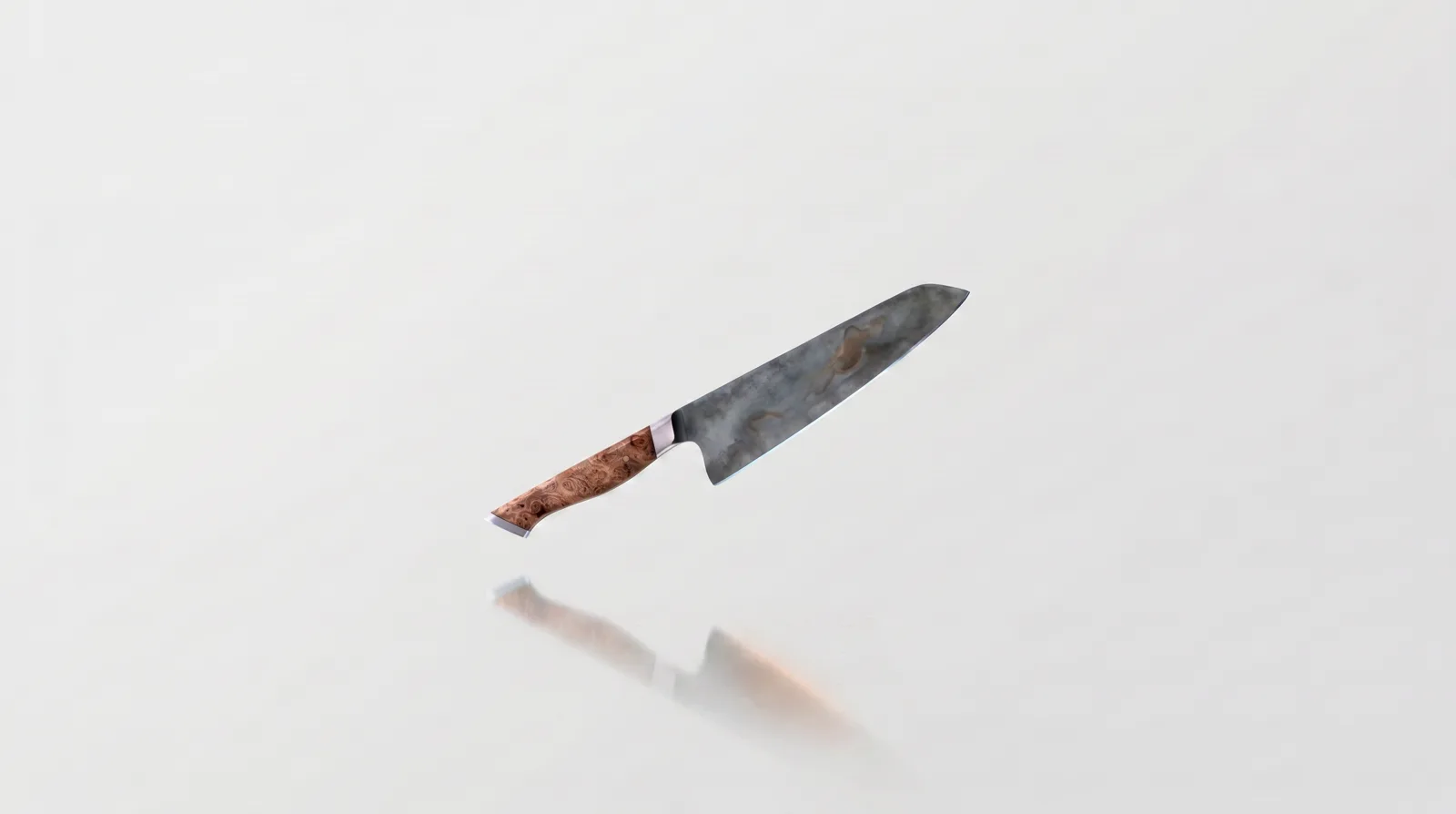
The same low chromium that allows the edge makes the steel reactive to moisture and acids. Drying the blade after use keeps it sound, and over time it takes on a darkened patina.
The blade you’ll own
Use it, and it earns its character.
Wipe it dry after each use and the steel darkens into a patina that’s yours alone. That’s the only upkeep the edge asks — the same hard, low-chromium steel that holds a finer edge longer between sharpenings.
$249.00 · Free shipping
30 days on faults and defects. Secure checkout, powered by Stripe.
The object
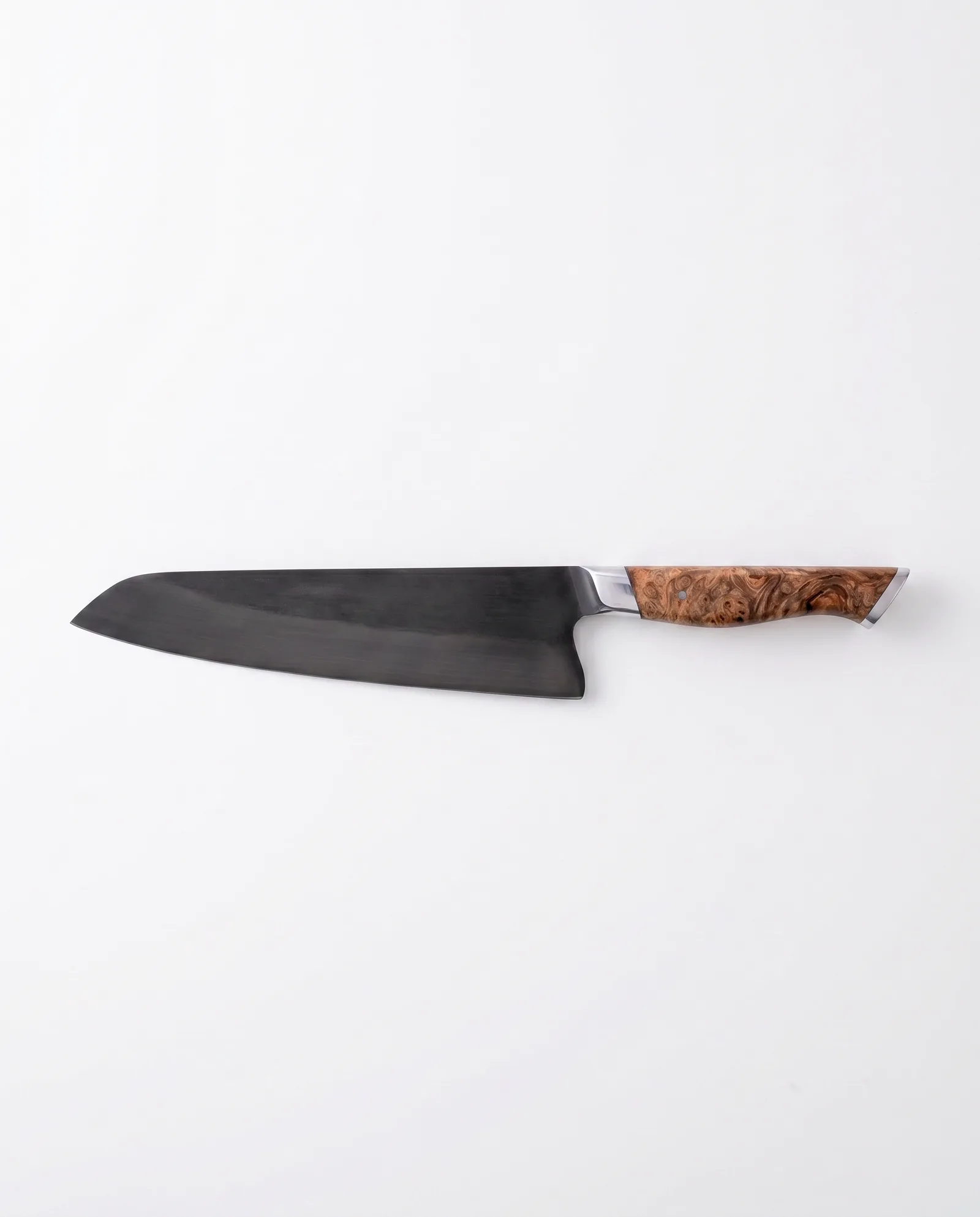
Forged steel, a full tang, one figured handle.
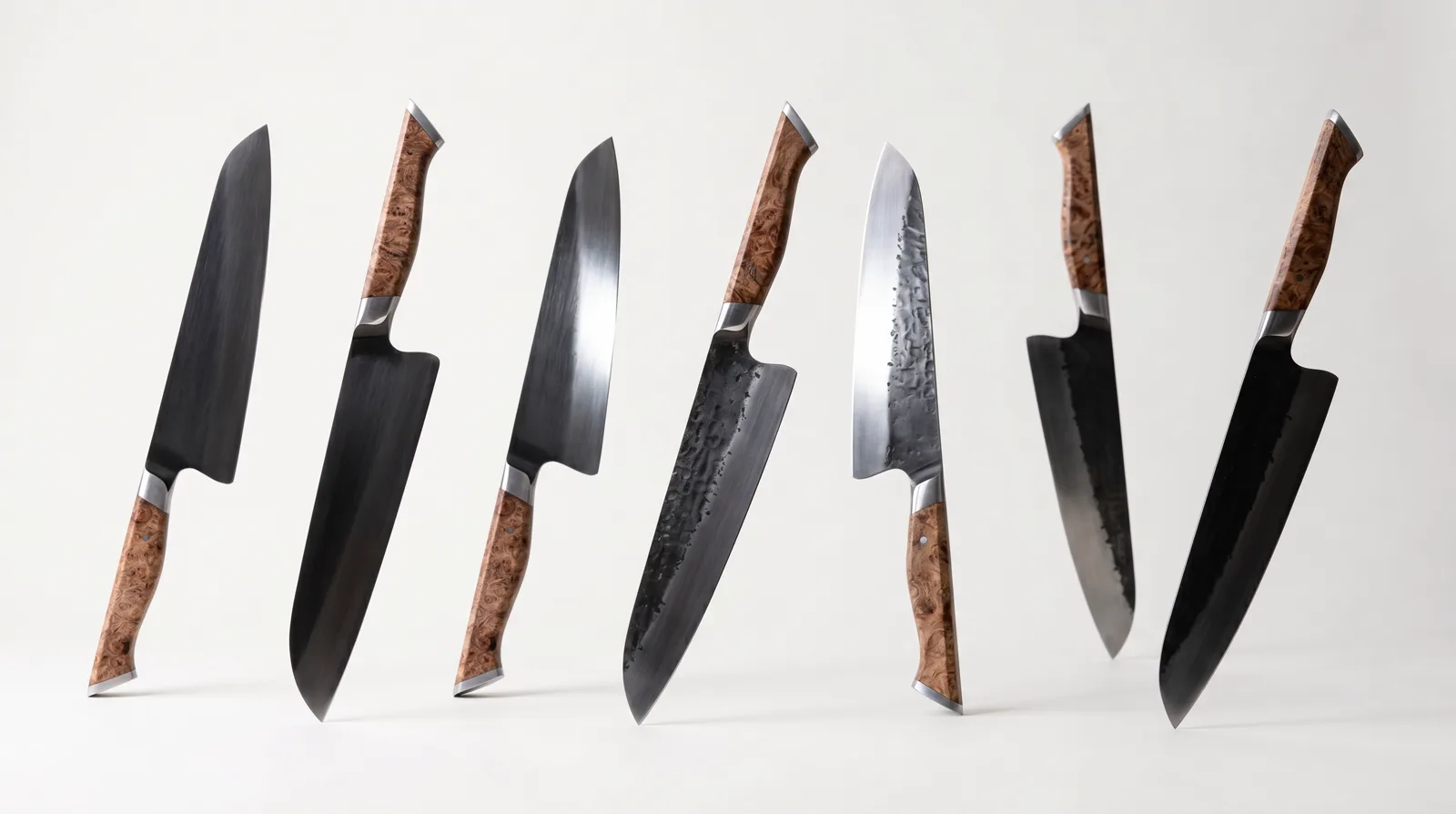
An 8-inch blade that runs unbroken through the handle to a polished steel bolster at the heel — forged high-carbon steel, with a figured-hardwood handle finished by hand. No two handles are cut the same.
- Blade
- 8-inch chef's knife
- Steel
- High-carbon, hardened
- Construction
- Full tang
- Bolster
- Polished steel
- Handle
- Figured hardwood
- Finish
- Hand-finished, one by one
Carbon steel vs the everyday stainless
Free
shipping, tracked
7-20d
overseas delivery
30d
returns on faults
Secure
Stripe checkout
In the kitchen
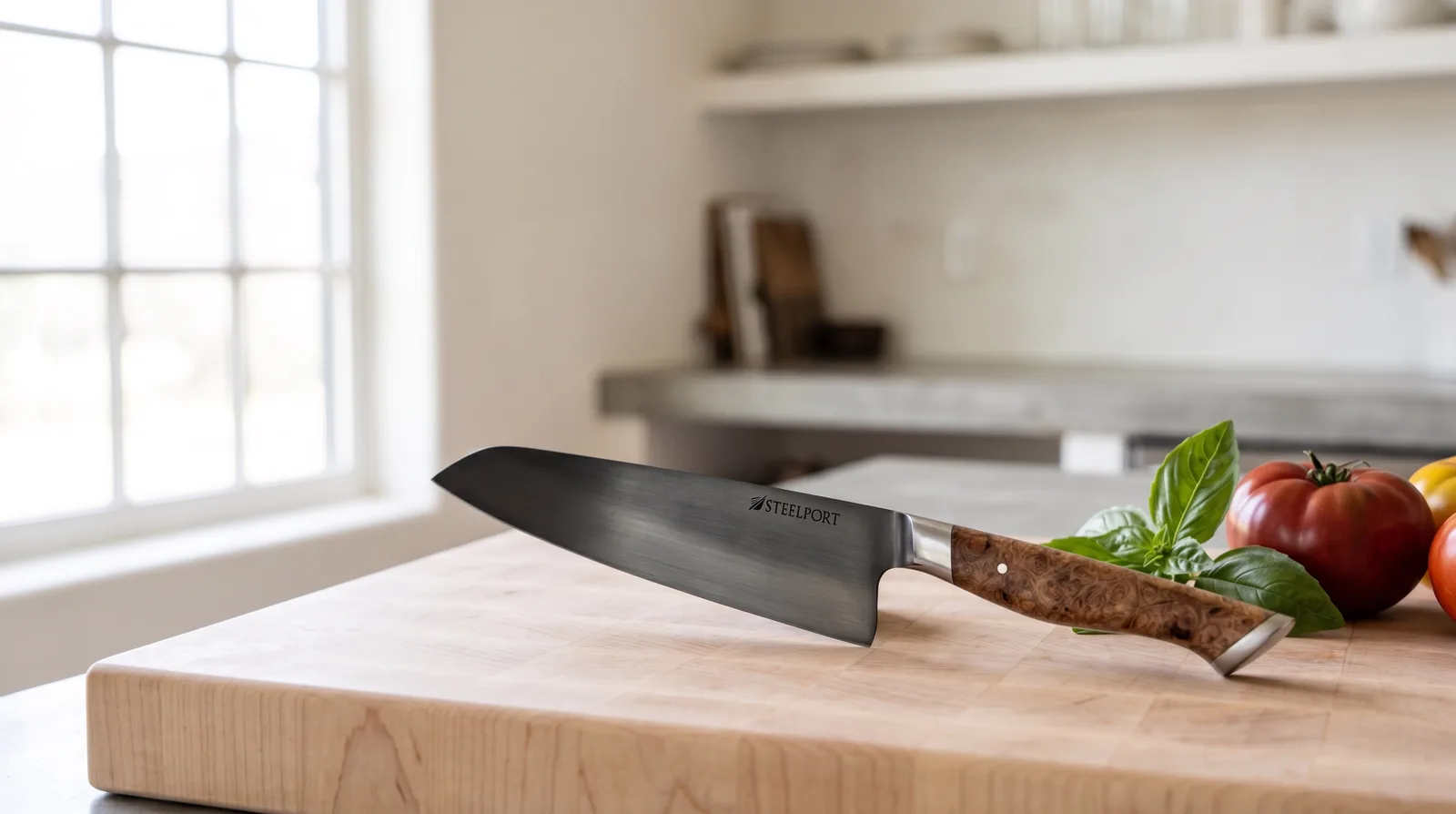
Herbs, not bruised. Tomatoes, not torn.
A thin, acute edge parts food cleanly under its own weight, so basil stays green at the cut and a ripe tomato opens without a saw. Less force from you, less waste on the board.
Hand-finished
No two leave the same.
Each blade is forged and finished by hand, so the surface, the grain of the burl, and the way it greys with use are particular to your knife — not a stamped copy of the next one.
The honest trade-off: with less chromium than stainless, the steel is reactive. Wipe it dry after use and it develops a darkened patina over time. That patina is the cost of the sharper edge — and the only upkeep the steel asks of you.
Reviews
Reserved for the first buyers.
4.7/5 average across 3 entries. These are layout samples — verified customer reviews replace them automatically as orders arrive.
Sample reviews — placeholders, not real customers
Sample · 5/5
This is a sample review showing how a real customer photo review will appear in this space.
Sample · 5/5
A second sample — verified buyer reviews replace these automatically as orders arrive.
Sample · 4/5
Sample layout text. Star ratings, buyer country, and photos render exactly like this.
The cover
30 days on faults and defects
If the knife arrives damaged, defective, or never shows up, we'll make it right within 30 days. Change-of-mind returns aren't covered, and shipping is tracked, typically arriving in 7–20 days.
30-day cover for faults, damage, or an order that never arrives. Change-of-mind returns aren't offered — it ships from an overseas warehouse.
How long does shipping take?
It ships from our overseas warehouse and most orders arrive in 7 to 20 days, with free shipping. A tracking number is emailed when it ships.
What if it arrives damaged?
send us a photo by email and we approve a full refund or a free replacement, with nothing to send back.
Can I return it if I change my mind?
Because orders ship from an overseas warehouse we can't take change-of-mind returns, so the item is yours to keep. We'd rather be upfront about that.
Who is behind the store?
It's operated from Australia, in conjunction with global suppliers. Questions are answered by email.
About
One knife, made to be maintained.
Hand Forged exists for the cook who would rather keep one good tool sharp than replace a cheap one every year. A forged, full-tang carbon-steel blade is built to be re-sharpened and kept, not replaced — so we sell the kind of knife that’s worth that care.
Hand Forged is operated from Australia, in conjunction with global suppliers.